
Jayonnaise6105
Princess of Nightmares and/or Queen of Friendship
- Joined
- Oct 5, 2025
- Messages
- 570
- Pronouns
- Them/They
*I don't know why some images are misaligned. Everything should be set to centre alignment, but uhhhhh.... XO
The Intro
Dragon Ball Z: The Legacy of Goku II is an action RPG for the GameBoy Advance developed by Webfoot Technologies, and published by Atari Inc. It was released on June 17, 2003 in the United States, and on August 1, 2003 for European regions. This game actually also has the distinction of being the only game in the trilogy to receive a Japanese version, which was released the following year on July 23, 2004. My understanding is that the Japanese version is largely the same game, with some reworked character portraits and name changes to better reflect the Japanese version of the Anime.
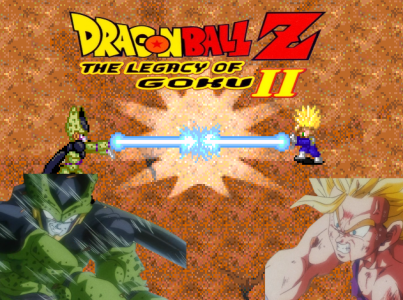
I closed my review of the first game by saying how, in spite of its rough edges, it was a promising base to work from, and that there was a lot of room for improvement overall. Thankfully, DBZ was insanely popular in the early-mid 2000s and the first game sold well enough to get a sequel in the first place. In almost every sense, The Legacy of Goku II is the improvement I was talking about: More playable characters, expanded and more responsive controls & move sets, as well as a more faithful adaptation to the Funimation dub of Dragon Ball Z.
I closed my review of the first game by saying how, in spite of its rough edges, it was a promising base to work from, and that there was a lot of room for improvement overall. Thankfully, DBZ was insanely popular in the early-mid 2000s and the first game sold well enough to get a sequel in the first place. In almost every sense, The Legacy of Goku II is the improvement I was talking about: More playable characters, expanded and more responsive controls & move sets, as well as a more faithful adaptation to the Funimation dub of Dragon Ball Z.
Expanding on the First Game
You no longer play as only Goku, with the game expanding to 5 playable characters: Goku, Gohan, Vegeta, Piccolo & Future Trunks (and maybe one more secret character?!). You swap between available characters via the brand new save points dotted around the game maps. I figure the first game let you save at any time in the pause menu to compensate for its unpolished and unforgiving combat. I guess the sequel, being far more polished and balanced, felt confident enough to give you fixed save points. Every character comes complete with a transformation and their own signature moves that you can manually trigger when you have enough Ki. This is another improvement over the first game, as it only had you transform in a cutscene as part of the final boss battle. The player finally has agency over when to become a Super Saiyan.
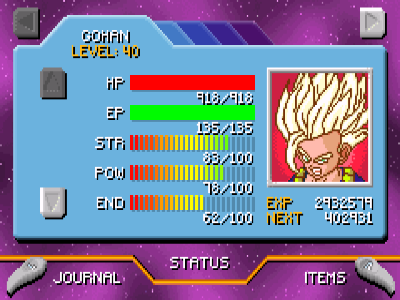
*These stats grow as you level up, and you can also find items to increase them for the character of your choice.
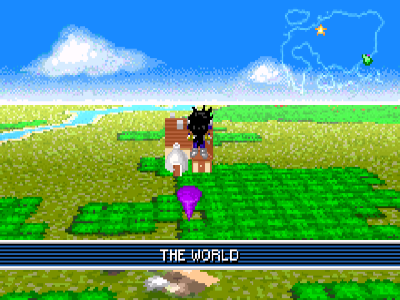
You have more freedom of movement, being able to traverse a world map and fly between locations, where the first game advanced through locations on its own as you made story progress.
The Story
The story picks up after the ending of the first game, with the fallout of the Frieza Saga, and mainly covers the Android and Cell Sagas. The devs would also start borrowing from the DBZ movies and specials as side content starting with this game. I know my mind was blown as a kid when Cooler, the main villain from my favourite DBZ movie, Cooler's Revenge, showed up to challenge Goku to a rematch on New Namek.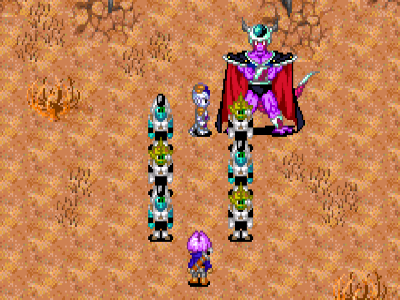
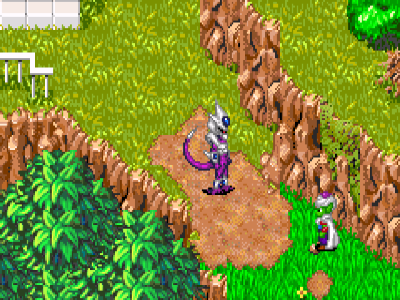
*This does mean that the story deviates from the Anime like in the first game, but in a way that I think adds some fan service and better fits with the vibe of the Anime.
The only real "joke" quest is running errands for Hercule, but even that involves rescuing children from a bus crash and battling through the minions of a local warlord. Much improved from more tedious stuff like picking flowers and rescuing a toy boat for a child.
Additional Details I Liked
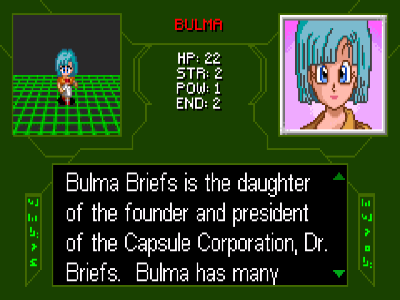
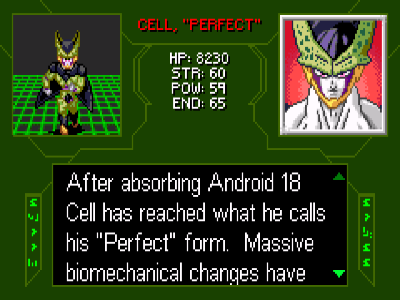
My absolute favourite new addition to this game is entirely optional: the Saiyan Scouter. Early on in the story, Bulma gives you a Saiyan Scouter that she repaired and this acts as a sort of encyclopaedia. You can scan basic enemies, NPCs & bosses to get more information on them. Their stats, their character model and a brief description of them will be recorded to a computer that you can use at Capsule Corp. This is entirely optional, though, and must be done manually by the player. That means you can miss out on completing all the entries if you don't scan certain NPCs or bosses before advancing the story.
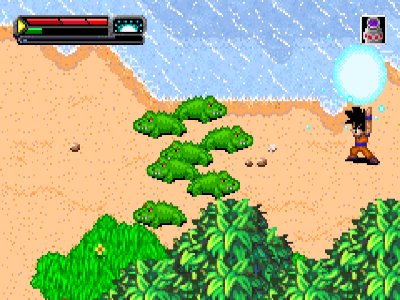
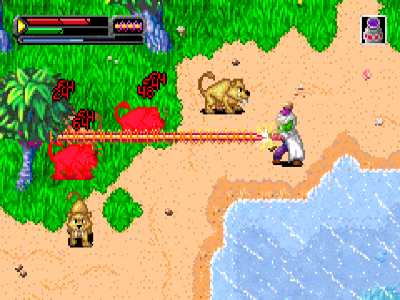
*Goku's Spirit Bomb compared to Piccolo's Special Beam Cannon
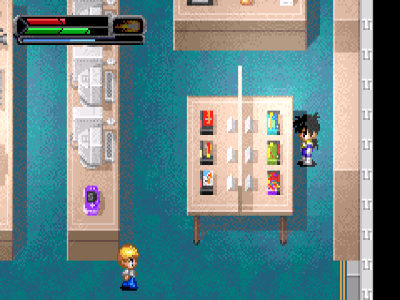
*I also love this little touch of including some SNES games in an electronics shop in West City. It makes for a fun little distraction trying to see if you can figure which games they are.I especially love how they recreated iconic scenes and moments from the Anime in the 32-bit style. Scenes such as Trunks laying waste to Mecha Frieza, confronting Androids 19 & 20 in Papaya Town, or the climactic clashing of Kamehameha waves between Perfect Cell & Super Saiyan 2 Gohan.
Flaws
If I had to level some complaints, the game is still kind of short. LoG 1 took me around 4 hours to finish, while LoG II took around 6 hours. Admittedly, I didn't do all of the side content, and the content I did finish was a significant step up in quality from its predecessor, but this is still a licensed GBA game at the end of the day. It is an action RPG, but leans a lot more into the action side of things. You could theoretically spend 10-20 hours playing it like some other GBA RPGs, but I think that isn't all that likely. There are also one or two quests tied to main story progress that can be a pain in the ass. As iconic as it is, hunting for the Dragon Balls does slow the pace of the game down a bit. There are also these doors that require a specific character to be a specific level to pass through them, so you may have to grind at points to open them. Not many blocked you in the story though, and were usually more reserved for optional side content.
Conclusion
I say this game still holds up very well and I would recommend checking it out. It could very easily have been a carbon copy cash grab of the first Legacy of Goku, but they took the time to polish and tweak The Legacy of Goku II into a genuinely good Dragon Ball game. Not that there isn't still room for improvement, of course.
Given strong sales and review numbers for LoG II, and the fact that there was still another 100 or so episodes left of Anime's story to cover, it was inevitable that a third game would be made. But how exactly would the third game expand on the improvements made by LoG II? Would Buu's Fury be a satisfying end to the trilogy? Those are questions for next time, on Dragon Ball Z.... review thing that I'm doing.
Last edited: